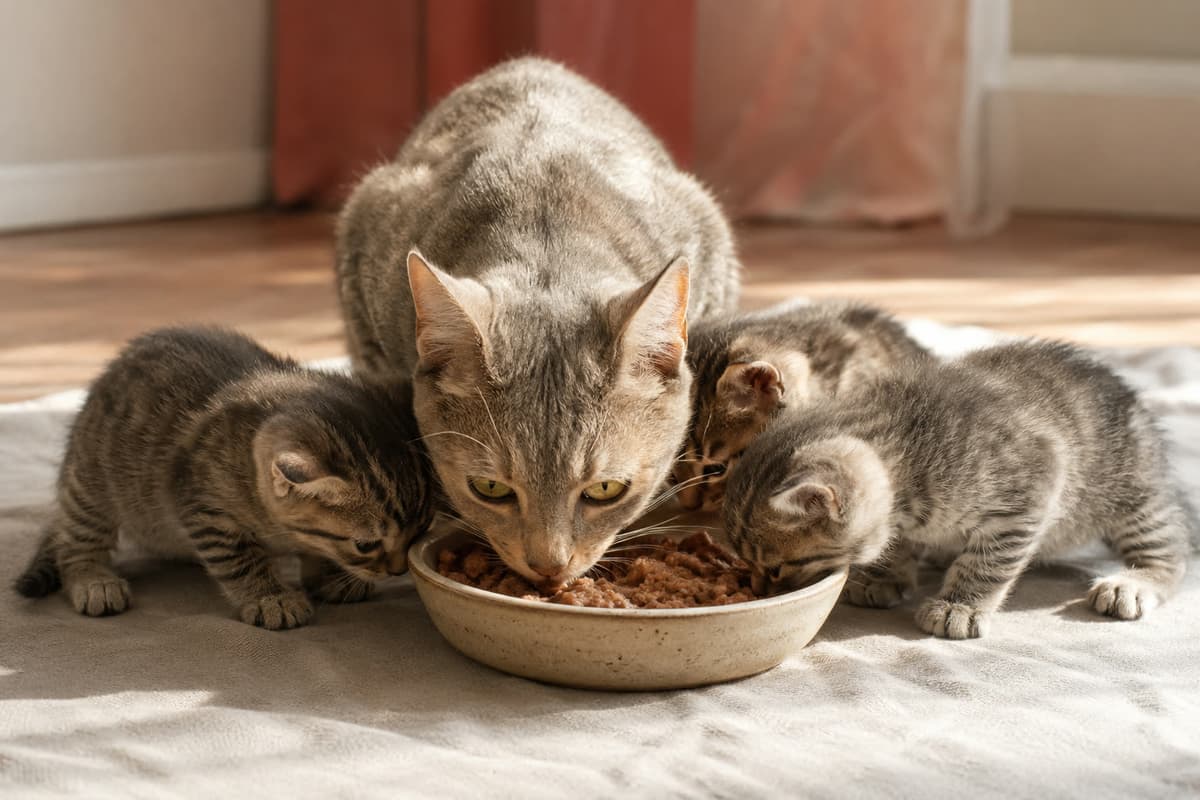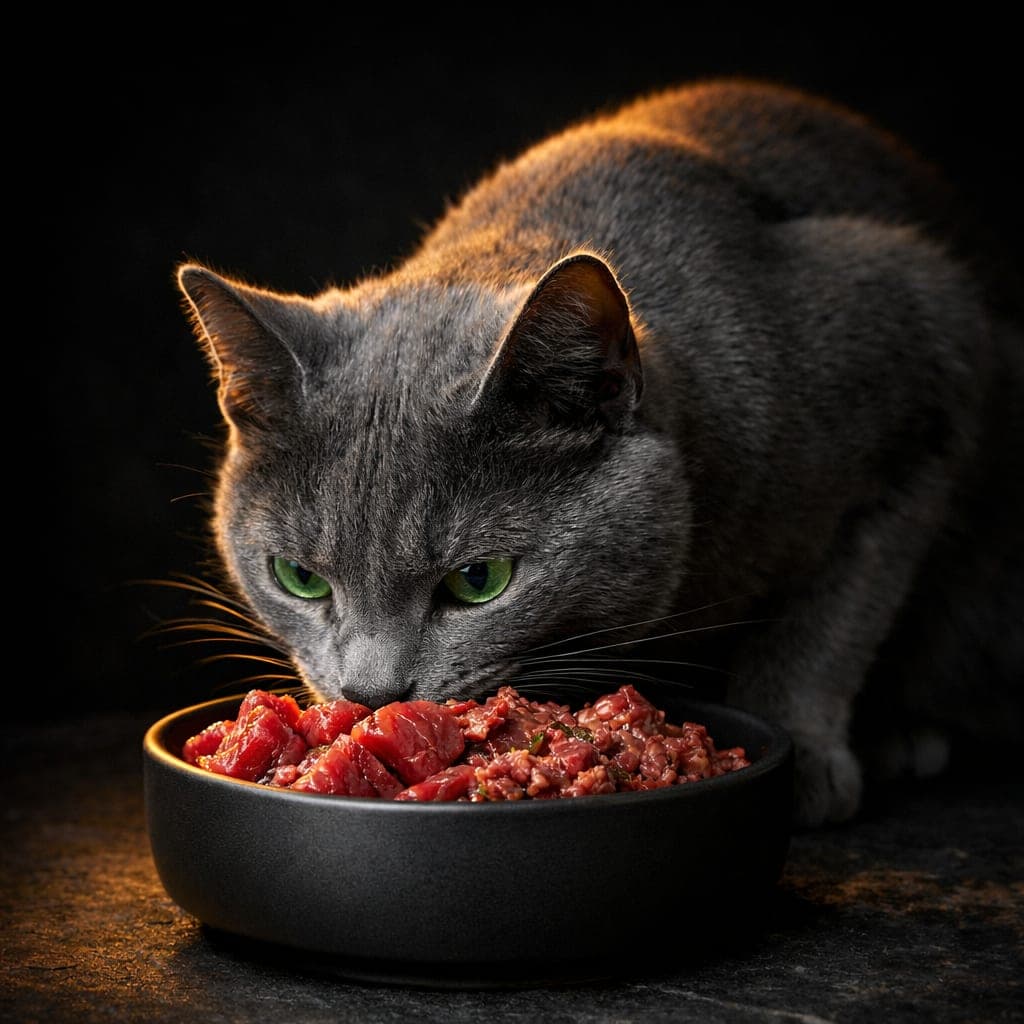
Cooking for a dog or cat is gaining popularity, especially when an animal stubbornly refuses raw meat. The answer to this problem is BACF — Biologically Appropriate Cooked Food. Don't be fooled by the acronym: it's simply a cooked version of the classic BARF diet, one that requires a little more effort but delivers benefits that are hard to overstate.
Why choose BACF?
- 100% safety — you have the assurance that you're neutralizing potential threats such as avian flu or Aujeszky's disease (pseudorabies) virus. Since June 2023, Poland has been free of this virus in domestic pigs, but it still poses a threat in wild boar meat.
- A solution for picky eaters — the ideal compromise for animals that simply won't go near raw meat, while you want to feed them as healthily as possible.
- Support for sensitive tummies — a great option for animals recovering from illness, those with pancreatic issues, and pets whose digestive systems are too sensitive to handle raw product.
What do you need to get started?
The foundation stays the same as with BARF — with the BARF calculator for balancing meals at the forefront. In addition:
- A pot with a lid and a stove.
- A bit more time for preparation than the raw version.
- Practical knowledge — which you'll gain by reading this guide to the end.
What you ABSOLUTELY must not do
Bones and supplements NEVER into the pot
Never cook bones or meat with bone. After heat treatment, bones become hard, sharp, and brittle — they risk perforating the intestines. Additionally, cooking leaches the nutrients out of them, which completely disrupts the trace-element balance.
Never cook supplements. Don't drop them into a hot mixture either. High temperature destroys the active ingredients, and a preparation treated that way becomes a nutritional unknown.
BACF in practice: a 3-phase process
1. Cooked ingredients
- Vegetables — cook long, all the way to a pulp (blend before cooking for ease). For the recipe, we always weigh them after cooking.
- Meat — for the recipe, we always weigh it raw. Cook briefly (about 10 minutes) over low heat, covered, with a minimal amount of water.
- Consistency — if your animal prefers a firm texture ("smooth"), cook the meat in small pieces and grind it only after processing. This prevents a watery pulp from forming.
- A trick against scorching — put the cooked vegetables and the fattier pieces of meat at the bottom of the pot first.
2. Adding supplements
- The critical temperature of 40°C — absolutely wait until the mixture has cooled to a maximum of 40°C. A higher temperature causes the oxidation of sensitive ingredients (e.g. omega-3 fatty acids).
- "Supplement soup" — supplements are best blended with a little water to form a uniform suspension. Pouring it into the meat makes even mixing much easier.
- Balancing the taurine — meat loses taurine during cooking.
+50%
For cats, increase the taurine dose by 50% relative to the raw recipe — e.g. 6 g instead of 4 g. For dogs, we add about 1 g per 1.5 kg of cooked meat. Any excess will be safely excreted in the urine.
3. Storage
- Overnight setting — put the whole mixed portion in the fridge overnight. The fat will set, and the mass will take on a jelly-like structure — after thawing, the consistency will be much better.
- Portioning — meat loses about 20% of its weight during cooking. When dividing into portions, go by how many days the mixture was planned for, and split it into equal parts.
- Freezing — transfer the finished meals into freezer containers. Label the date and the number of days the portion will last.
The golden rules of BACF in a nutshell
| Category | The most important rule |
|---|---|
| Meat | Weighed raw, cooked briefly |
| Vegetables | Weighed cooked, cooked long |
| Supplements | Added only to a lukewarm mixture (max 40°C) |
| Frozen goods | Cooking lets you safely refreeze previously frozen meat |
| Mixing diets | You can confidently serve "half-and-half" (part raw, part cooked) |
Cooking is not a failure of BARF. It is its flexible adaptation — for animals that can't handle raw product, and for owners who need an extra layer of safety. The point of the diet stays the same.
— The point of the cooked variant
Summary
Preparing cooked BARF is a task for the patient, but the health benefits are worth it. By cooking BACF, you're doing the best you can for your animal — and yes, you have every right to call yourself a proud "barfer." Just remember the three hard rules: bones raw only, supplements only into a lukewarm mixture, taurine +50% for cats.
The rest is cooking, patience, and the BARF calculator, which keeps an eye on the proportions.
Sources
- Billinghurst I. (2001). The BARF Diet: Raw Feeding for Dogs and Cats Using Evolutionary Principles. Warrigal Publishing.
- Hickman M.A., Rogers Q.R., Morris J.G. (1990). Effect of processing on fate of dietary taurine in cats. Journal of Nutrition, 120(9), 995-1000.
- Państwowy Instytut Weterynaryjny — PIB (2023). Komunikat o eradykacji wirusa Aujeszkyego u świń domowych w Polsce. PIWet-PIB, Puławy.
- Larsen J.A., Parks E.M., Heinze C.R., Fascetti A.J. (2014). Evaluation of recipes for home-prepared diets for dogs and cats with chronic kidney disease. Journal of the American Veterinary Medical Association, 240(5), 532-538.
Frequently asked
Who do you recommend BACF for instead of raw BARF?
Picky eaters who refuse raw meat, animals recovering from illness, pets with pancreatic issues, and sensitive digestive systems. Also for people who simply aren't comfortable with raw meat in the house.
Why is it forbidden to cook bones?
Cooking changes the structure of bone — it becomes hard, sharp, and brittle, which risks perforating the intestines. Additionally, hot water leaches out the minerals, so the bone loses the nutritional value for which you're feeding it.
How long should I cook the meat in BACF?
Briefly — about 10 minutes over low heat, covered, with a minimal amount of water. The goal is to neutralize pathogens, not to prepare a full-fledged dish for a human.
Can I freeze previously thawed meat after cooking it?
Yes. Cooking is a safety bridge that lets you safely refreeze previously thawed meat — something you shouldn't do with raw product.
Can I mix raw and cooked ingredients?
Yes. Half-and-half mixes are fine — part of the meal raw, part cooked. It's a good compromise for animals in the middle of a transition or for owners who want flexibility.