„Get a second cat, he won't be bored!” — you hear from friends. „Never! My cat is a loner!” — say others. The internet is split on the question. Shelters increasingly rehome kittens only in pairs. Are you wondering whether your cat actually needs a companion, or whether a second cat will destroy the harmony at home? Relax. Science has quite a lot to say on the subject, and the truth is, as usual, far more nuanced than the memes. Time to take it apart.
The myth of the solitary cat — what the research really shows
For decades the cat was the textbook example of the „solitary hunter”. Researchers such as Kleiman and Eisenberg classified the domestic cat back in 1973 as a species with a predominantly solitary strategy, and the label stuck to cats for a very long time. The problem is that it simply was not true.
Modern ethology describes the cat as a facultatively social species. That means a cat can live alone, OR in a group, depending on the availability of resources, experiences during the so-called sensitive period (early kittenhood) and individual personality. Most cats in the world live free-roaming, and there — as port, farm and urban colonies show — they form stable social groups built mainly around related females.
Researchers (Vitale, Behnke and Udell) adapted the „Strange Situation” test, familiar from child psychology (it examines reactions to isolation and to the caregiver's return), to assess cat behaviour. It turned out that as many as 65% of cats showed a secure attachment to their caregiver. That is exactly the same proportion as in human infants, and a result very close to dogs (58%). These data finally break the myth that a cat bonds only with a place and not with a person.
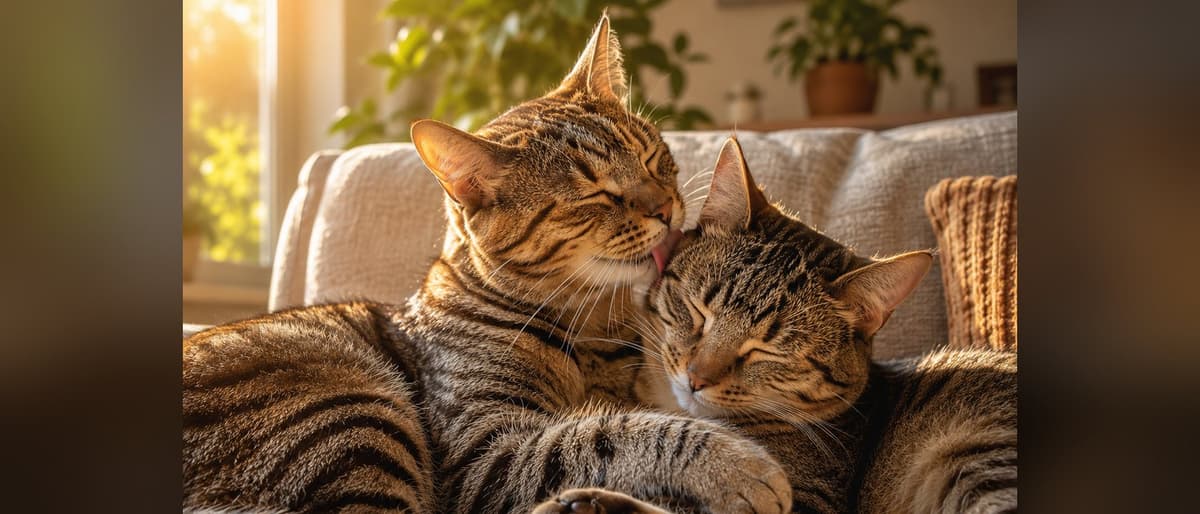
What is more, in favourable conditions cats not only tolerate one another's presence but display a whole range of prosocial (affiliative) behaviours: greeting nose to nose, mutual grooming, rubbing against each other, sleeping in direct physical contact and greeting with a raised tail. These are social behaviours that a strict evolutionary loner would simply never have developed.
Compute your cat's diet — BARF calculatorOpen calculatorWhy two kittens is not a whim
When it comes to adopting young kittens, science's answer to „one or two?” is relatively clear.
In a classic study from 1999, Bradshaw and Hall compared pairs of littermates with pairs of unrelated cats, observed under identical conditions. The results were unambiguous: siblings spent more time close to one another, groomed each other more often and fed side by side, while some of the unrelated pairs never came into physical contact at all. These differences held even under the highly stressful conditions of a stay in a boarding cattery.
Shelter research, in turn, shows that pairs adopted together spend more time in the facility waiting for a home (42%, or three days, longer on average), while at the same time video observation shows them directing significantly more affiliative behaviour at each other than cats adopted singly.
The catch the authors of that study state outright
The same work (Engebrecht et al. 2022) carries a warning that gets lost in adoption campaigns. If a cat had a note on its record saying it must be rehomed together with another cat, it waited not three days longer but thirteen — 185% longer.
Worse, the authors found a large discrepancy between which pairs the shelter classified as inseparable and which would be classified that way on the basis of their behaviour alone. In other words: some cats wait months for a joint home with a cat they are not actually bonded to. The authors close by recommending that decisions to place cats together be made carefully.
The practical takeaway for an adopter: „a pair from a breeder or shelter” is an asset when the cats actually spend time together — not when they merely ended up in the same pen.
People often speak of „single kitten syndrome”. Let us be honest: from a clinical point of view this is an anecdotal notion with no hard evidence from randomised controlled trials (RCTs). There is, however, strong indirect evidence that isolating kittens from their peers during the sensitive period leads to real social deficits. (That period is classically set at weeks 2–7 of life, after the work of Karsh and Turner; some more recent sources extend it to week 9, and researchers stress that its end is not fixed and varies between individual cats.)
- Kittens raised without littermates bite more frequently, fail to inhibit bite force and play inappropriately, with elements of aggression. The strongest hard evidence concerns the moment of weaning: in a study of 5726 cats, animals weaned before 8 weeks more often showed aggression towards strangers and stereotypic behaviour, with the risk falling all the way to week 14 of life (Ahola et al. 2017). One caveat matters, though: the effect concerned aggression towards people, not towards other cats.
- Cats coming from single-cat homes cope worse with their first days in a shelter — they scored higher on the Cat Stress Score than cats from multi-cat homes, but only for the first four days; after that the difference disappeared (Broadley et al. 2013, 63 cats).
Kittens simply learn boundaries from their peers. If you decide on a single kitten, you have to step into the role of its principal feline educator and give it intensive socialisation.
The rules caught up with the research
The age at which a kitten goes to its new home is no longer purely a matter of the breeder's goodwill. FIFe's breeding rules (§ 2.3.3) put it plainly: a kitten must not go to a new owner before it is 14 weeks old and has been fully vaccinated against feline panleucopenia, feline calicivirus and feline herpesvirus, unless a veterinarian advises otherwise. The previous threshold was 12 weeks.
That is exactly the threshold at which Ahola and colleagues saw the advantage: cats separated from their mother and litter at 14–15 weeks were less likely to groom excessively than those separated at 12–13 weeks.
For a buyer this is a simple reference point. An offer of „a kitten ready to collect at eight weeks” is not a few days earlier than the standard — it is outside it.
When TWO cats are a WORSE idea than one
This is the part rarely written about in adoption campaigns. The truth is that in certain arrangements a second cat can drastically lower the welfare of the first. The critical review by Finka and Foreman-Worsley clearly indicates that the main factors worsening cats' wellbeing in a group are:
- the absence of early socialisation of that particular cat with other members of its own species,
- insufficient space per individual and a shortage of resources (litter boxes, bowls, shelves),
- forced sharing of territory by individuals that do not care for one another.
Aggression between cats in one household is one of the most common behavioural problems. Such conflicts intensify as the number of cats in the home grows — the more cats, the more frequent the signs of tension. Counter-intuitively, letting the cats outdoors does not protect against them — in the largest study of cat pairs, it was the pairs with outdoor access that were more often described as a negative relationship than pairs kept indoors only (Khoddami et al. 2023). Research carried out on nearly 2500 owners in the USA, in turn, revealed the scale of the problem:
- As many as 73.3% of owners noticed signs of conflict from the very beginning of introducing the new cat.
- Persistent staring was the most common warning signal, occurring daily in almost half of the households studied.
- The way the first introduction was carried out was a strong predictor of the two cats' relationship for years to come.
The exact numbers from that study
This is the work of Elzerman and colleagues (2020), and the figures are worth knowing precisely, because they show how ordinary conflict between cats is.
The survey was completed by 2492 owners of cats from multi-cat homes. Persistent staring turned out to be the most frequent sign of conflict and occurred at least once a day in 44.9% of households — that is, in almost half.
It is worth noting what that number actually says: not that half of all cat pairs live at war, but that signs of tension are so common that most owners simply stop noticing them. Staring does not look like a quarrel — and it is its quietest version. I have gathered more on how cats speak to one another with their bodies in the article on cat body language.
Two more things from the same paper, so the picture does not come out blacker than it is. Affiliative signs were recorded more often than conflict signs, and physical contact between cats occurred daily in roughly half of the multi-cat households. And a surprise: no household variable — including floor area and numerically adequate provision of resources — predicted the frequency of conflict well. What correlated most strongly was the owner's impression of the cats' first introduction.
For the record: the study was funded by Ceva Santé Animale, a manufacturer of feline pheromones, and two of the authors are its employees. The behaviour frequencies themselves are descriptive data, but it is worth knowing.
Matching: age, sex, temperament, breed
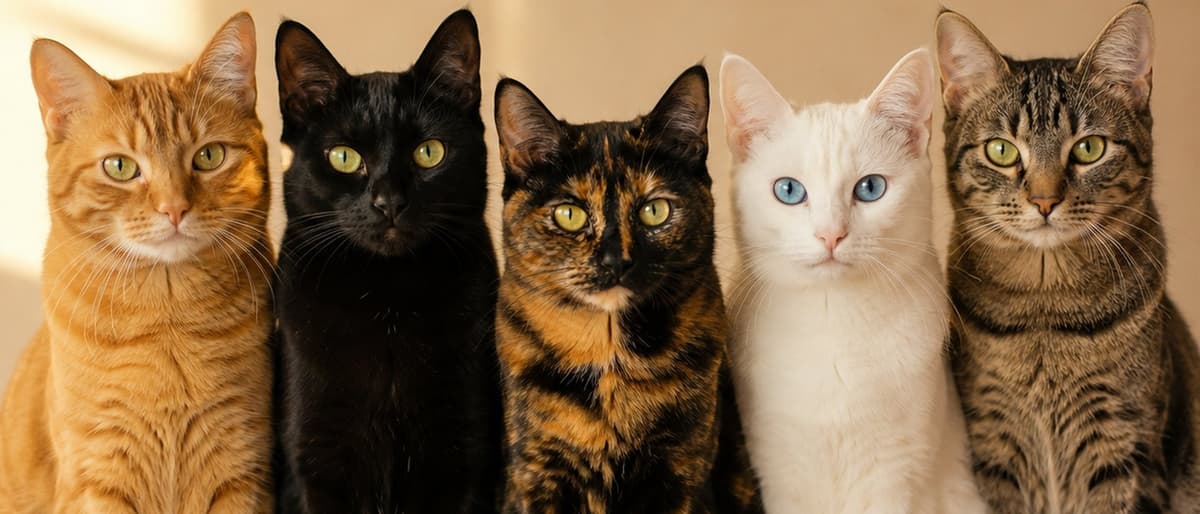
If you decide to add a second cat, choosing the right companion is crucial.
Age: On the face of it the guidance on age may look contradictory, but in reality it is very logical. On one hand, research indicates that animals of similar age and similar energy levels get along best (too large an age gap is often a source of frustration and negative relations). On the other hand, if we already have an adult only-cat at home and want to add someone new, introducing a kitten tends to be easier than introducing an adult stranger, who is immediately perceived as a serious territorial threat. This one is practical guidance rather than a hard research finding: Levine and colleagues (2005) looked at what predicts fighting after a new cat arrives, and the only clear factor turned out to be whether the cats had outdoor access.
Sex: Popular opinion praises „mixed pairs”, but the research here is more cautious than the way it is usually quoted. Observing 60 pairs of indoor-only cats, Barry and Crowell-Davis (1999) found no significant differences between the sexes in either affiliative behaviour or aggression — the one clear difference was that females never allorubbed other females. A stronger signal comes from a newer and far larger study: among 6529 pairs described by their owners, it was two spayed females that most often formed a relationship rated as negative (Khoddami et al. 2023). Analyses of aggression cases do not, meanwhile, show that treating behavioural problems is any harder in same-sex pairs than in mixed ones. All of this concerns neutered cats only, incidentally — in males, castration clearly reduces fighting (Hart and Barrett, 1973). What emerges from that same study by Barry and Crowell-Davis carries more weight than sex: cats that have lived together longer are less likely to engage in overt aggression.
Temperament: This factor matters far more than sex or age. Match cats with similar energy levels — pairing a hyperactive adolescent with a placid senior cat is a recipe for a conflict of interests.
Breed: Traits such as „sociability towards other cats” show partial heritability. Research on a sample of over 5700 cats confirmed differences in personality between breeds. On sociability towards other cats, Orientals scored highest and Turkish Vans lowest. Despite these breed tendencies, the enormous differences between individuals mean that the character of the particular cat should have the decisive say.
Where the breed figures come from — and what they must NOT be read as
Two Finnish studies stand behind the paragraph above, and it is worth separating them, because they measured different things.
Salonen and colleagues (2019) studied 5726 cats and demonstrated heritable differences between breeds across ten behavioural traits. That is where the „over 5700” figure comes from. That work, however, measured aggression towards cats, not sociability — and it is there that the Turkish Van emerged as the breed with the highest probability of aggression towards other cats, and Persians as the least aggressive.
Sociability towards cats itself was only measured in a later paper by the same team, on 4316 cats (Mikkola et al. 2021), and the result is brief: Orientals highest, Turkish Vans lowest.
Worth knowing, too, that sociability towards cats and towards humans are two different traits, measured separately. In that same paper the most sociable towards people were Siamese and Balinese, the least sociable Persians and Exotics. A cat that charms your guests may well not tolerate another cat — and the other way round.
And the most important point: these are breed averages, not predictions for your cat. Differences between individuals within a breed are larger than differences between breeds, so „I got an Oriental because they're sociable” is as unreliable as choosing a cat by colour. Breed shifts the probability; it does not settle the matter.
The introduction — the moment that will weigh on years
A bad introduction can ruin the relationship of perfectly matched cats (throwing them into one room to „sort it out” is the classic error described among others by Levine in 2005, where a relationship founded on initial aggression rarely repaired itself).
The standard recommendation is a process measured in weeks rather than days. The time quoted varies between sources — from a couple of weeks to a few months — because the pace is set by the cat, not the calendar. The order of the steps, however, is the same everywhere:
- Complete physical separation.
- Slow scent exchange (blankets, bedding).
- Swapping territories while the cats cannot see each other.
- Brief visual contact (through a screen, for instance) paired with a positive stimulus (food).
One curiosity is a 2025 study from Denmark: in very young cats (under 4 years) the classic separation techniques sometimes correlated with higher tension in the first month, which suggests there is no single rigid algorithm for every scenario, and that separation-based interventions are sometimes implemented by owners only once the first conflicts have appeared.
Why the Danish result does not mean „don't separate your cats”
The work of Hoff and colleagues (2025) covered 308 Danish owners who had introduced a new cat into a home with a resident cat, drawn from a sample of 1507 respondents.
The result sounds like the opposite of the recommendations: in pairs where both cats were young, separation, scent swapping, barriers and pheromones were associated with more agonistic reactions in the first month. In mature cats (5 years and older), barriers, play and adding resources performed better.
The authors themselves offer the simplest explanation for this apparent contradiction: owners reach for these techniques only once the cats have already started fighting — or when they anticipate trouble. Which means what is being measured here is the order of events, not the effectiveness of the method. So there is no evidence here that separation is harmful; there is evidence that a survey cannot tell treatment apart from prevention.
Resources — the underrated factor
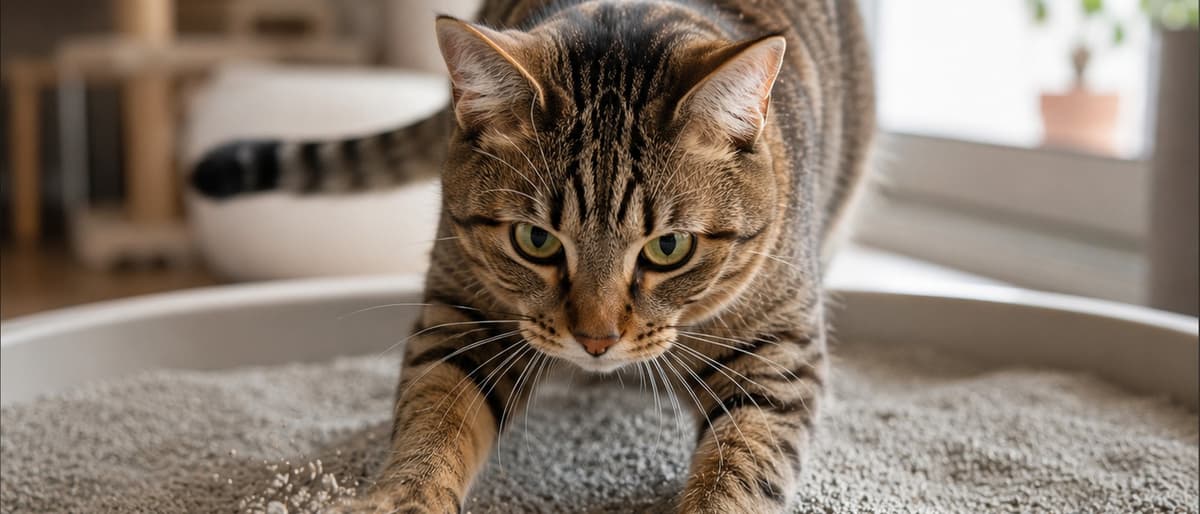
In multi-cat homes the mathematics of resources is fundamental. The best-known rule says the number of litter boxes should equal the number of cats plus one — although the AAFP and ISFM guidelines themselves (Carney et al. 2014) call this a „historical rule of thumb” rather than an absolute requirement, and treat the placement of the boxes and the number of social groups in the home as more important. That means three separate litter boxes for two cats. Separated feeding stations are also required and, above all, vertical space. Cats do not resolve conflicts by squaring up for a fight, but by avoiding one another — among other things by escaping upwards. A shortage of resources, and their over-concentration in a small area, is a near-guarantee of stress.
Does more always mean better?
No. The number of cats is not the best indicator of their welfare. Far more important are the square metres per individual, the quantity of resources and the quality of the relationship between the particular animals.
To sum up: having a second cat is a wonderful idea, provided you choose the companion carefully, have enough space and show enormous patience during their first introduction. You are, after all, inviting a fully-fledged household member under your roof, with needs and boundaries of its own.
When the cats already live together and something has snapped
A separate situation this article does not cover: cats that have lived in harmony for years, between whom conflict erupts suddenly, from one day to the next. Usually it is not about matching or introduction at all, but about redirected aggression — a cat frightened by something else entirely discharges the tension onto whoever is nearest. I have described this in a separate article on redirected aggression.
A sudden change in the relationship between cats can also be the first sign of pain or illness in one of them — before you treat it as a behavioural problem, it is worth ruling out a medical cause with your vet.
References
- Vitale, K.R., Behnke, A.C. & Udell, M.A.R. (2019). Attachment bonds between domestic cats and humans, Current Biology, 29(18), R864–R865doi:10.1016/j.cub.2019.08.036
- Bradshaw, J.W.S. (2016). Sociality in cats: A comparative review, Journal of Veterinary Behavior, 11, 113–124doi:10.1016/j.jveb.2015.09.004
- Crowell-Davis, S.L., Curtis, T.M. & Knowles, R.J. (2004). Social organization in the cat: A modern understanding, Journal of Feline Medicine and Surgery, 6(1), 19–28doi:10.1016/j.jfms.2003.09.013
- Bradshaw, J.W.S. & Hall, S.L. (1999). Affiliative behaviour of related and unrelated pairs of cats in catteries: a preliminary report, Applied Animal Behaviour Science, 63(3), 251–255doi:10.1016/S0168-1591(99)00007-6
- Engebrecht, L., Smith, T. & Suchak, M. (2022). Single vs multiple cat adoptions: a trade-off between longer adoption times and social bonding in shelter cats, Animal Welfare, 31(3), 329–339doi:10.7120/09627286.31.3.006
- Carney, H.C., Sadek, T.P., Curtis, T.M., Halls, V., Heath, S., Hutchison, P., Mundschenk, K. & Westropp, J.L. (2014). AAFP and ISFM guidelines for diagnosing and solving house-soiling behavior in cats, Journal of Feline Medicine and Surgery, 16(7), 579–598doi:10.1177/1098612X14539092
- Ahola, M.K., Vapalahti, K. & Lohi, H. (2017). Early weaning increases aggression and stereotypic behaviour in cats, Scientific Reports, 7, 10412doi:10.1038/s41598-017-11173-5
- Broadley, H.M., McCobb, E.C. & Slater, M.R. (2013). Effect of single-cat versus multi-cat home history on perceived behavioral stress in domestic cats (Felis silvestrus catus) in an animal shelter, Journal of Feline Medicine and Surgery, 16(2), 137–143doi:10.1177/1098612X13502972
- Khoddami, S., Kiser, M.C. & Moody, C.M. (2023). Why can't we be friends? Exploring factors associated with cat owners' perceptions of the cat-cat relationship in two-cat households, Frontiers in Veterinary Science, 10, 1128757doi:10.3389/fvets.2023.1128757
- Elzerman, A.L., DePorter, T.L., Beck, A. & Collin, J.-F. (2020). Conflict and affiliative behavior frequency between cats in multi-cat households: a survey-based study, Journal of Feline Medicine and Surgery, 22(8), 705–717doi:10.1177/1098612X19877988
- Finka, L.R. & Foreman-Worsley, R. (2022). Are multi-cat homes more stressful? A critical review of the evidence associated with cat group size and wellbeing, Journal of Feline Medicine and Surgery, 24(2), 65–76doi:10.1177/1098612X211013741
- Finka, L.R. (2022). Conspecific and human sociality in the domestic cat: consideration of proximate mechanisms, human selection and implications for cat welfare, Animals, 12(3), 298doi:10.3390/ani12030298
- Lindell, E.M., Erb, H.N. & Houpt, K.A. (1997). Intercat aggression: a retrospective study examining types of aggression, sexes of fighting pairs, and effectiveness of treatment, Applied Animal Behaviour Science, 55(1–2), 153–162doi:10.1016/S0168-1591(97)00032-4
- Barry, K.J. & Crowell-Davis, S.L. (1999). Gender differences in the social behavior of the neutered indoor-only domestic cat, Applied Animal Behaviour Science, 64(3), 193–211doi:10.1016/S0168-1591(99)00030-1
- Ramos, D. (2019). Common feline problem behaviors: Aggression in multi-cat households, Journal of Feline Medicine and Surgery, 21(3), 221–233doi:10.1177/1098612X19831204
- Salonen, M., Vapalahti, K., Tiira, K., Mäki-Tanila, A. & Lohi, H. (2019). Breed differences of heritable behaviour traits in cats, Scientific Reports, 9, 7949doi:10.1038/s41598-019-44324-x
- Mikkola, S., Salonen, M., Hakanen, E., Sulkama, S. & Lohi, H. (2021). Reliability and validity of seven feline behavior and personality traits, Animals, 11(7), 1991doi:10.3390/ani11071991
- Hoff, A., Czycholl, I., Lund, T.B., Mills, D.S., Serpell, J.A. & Sandøe, P. (2025). Introducing new cats to multi-cat households: results of a representative survey of Danish cat owners, Applied Animal Behaviour Science, 293, 106855doi:10.1016/j.applanim.2025.106855
- Cummings, D.L. (2019). Practical guidance on how to facilitate harmonious feline social interactions with conspecifics, Companion Animal, 24(11), 556–560doi:10.12968/coan.2019.0038
- Kleiman, D.G. & Eisenberg, J.F. (1973). Comparisons of canid and felid social systems from an evolutionary perspective, Animal Behaviour, 21(4), 637–659doi:10.1016/S0003-3472(73)80088-0
- Hart, B.L. & Barrett, R.E. (1973). Effects of castration on fighting, roaming, and urine spraying in adult male cats, Journal of the American Veterinary Medical Association, 163(3), 290–292doi:10.2460/javma.1973.163.03.290
- Levine, E., Perry, P., Scarlett, J. & Houpt, K.A. (2005). Intercat aggression in households following the introduction of a new cat, Applied Animal Behaviour Science, 90(3–4), 325–336doi:10.1016/j.applanim.2004.07.006
Frequently asked
Does a cat need a second cat?
That depends on the individual cat, not on the species. The domestic cat is facultatively social: it can live alone or in a group, depending on the availability of resources, experiences during the sensitive period (classically weeks 2–7 of life, extended by some sources to week 9) and individual personality. A kitten raised without littermates genuinely loses out socially, and there a second cat is often the right answer. An adult cat with no earlier socialisation to other cats, living in a small flat, may only lose from the arrival of a companion.
Is it better to adopt two kittens or one?
With kittens, science's answer is relatively clear and points to a pair, ideally siblings. In a study comparing pairs of littermates with pairs of unrelated cats, the siblings spent more time together and groomed each other more often, while some of the unrelated pairs never came into physical contact at all. Kittens learn boundaries from their peers — those raised alone bite more often and fail to inhibit bite force. If you decide on a single kitten, you have to step into the role of its feline educator.
Which cats get along best?
Temperament matters most, not sex or age — match cats with similar energy levels. Sex counts for less than popular opinion holds: an observational study of 60 pairs of household cats found no significant differences between the sexes in affiliative behaviour or aggression. The one clearer signal comes from a survey of 6529 owners of pairs: two spayed females were most often described as a negative relationship. When adding to a resident adult only-cat, a kitten is usually better tolerated than an adult stranger, who is immediately read as a territorial threat. Breed matters less, although sociability towards other cats is partly heritable.
How many litter boxes for two cats?
Three — with a caveat. The „one box per cat plus one” rule is widespread, but the AAFP and ISFM guidelines themselves call it a historical rule of thumb rather than a requirement, and treat the placement of the boxes as more important. Three boxes lined up in one bathroom count as a single location to a cat, so they should stand in different parts of the home. On top of that you need separated feeding stations and, above all, vertical space — cats do not resolve conflicts by fighting but by avoiding one another, including by escaping upwards.