Your cat looks like a tiger in miniature, but the most interesting things happen under the skin. Walking, jumping, licking, purring, catching light in the dark — each of them rests on a structure you cannot see, and one whose design is often good enough that engineers try to copy it.
Every one of these solutions is the product of millions of years of evolution in a nocturnal predator of desert ancestry (Driscoll et al., 2007). I have gathered the seven least obvious ones here, all based on peer-reviewed research — work checked by independent experts before publication.
1. Whiskers: a spatial sensor with 100–200 nerves at the base
Vibrissae look like long, stiff hairs, but anatomically they are something entirely different from the rest of the coat.
Ahl (1986) pulled together what is known about them in a classic review. At the base of every single vibrissa sits a blood-filled sinus acting as a microscopic pressure sensor, together with 100–200 nerve endings responding to touch, pressure and movement. Each whisker is a separate living sensor — and together they form a spatial system:
| Task | What it tells the cat |
|---|---|
| Hunting | Where the prey is in poor light |
| Attack | How to position the head just before biting |
| Communication | Whisker posture betrays emotion: forward for interest, back for fear |
| Environment | Air currents and wind direction |
| Swimming | How to hold the head above water |
The most striking part is that a cat does not look at its prey in the final phase of an attack. Its eyes are not built for sharp focus right at the muzzle, so over the last few centimetres the whiskers take over navigation.
100–200
A cat has around 24 cheek whiskers, twelve on each side. Each has its own nerve supply — together producing a stream of data comparable to a separate sense.
Hence a very practical conclusion: never trim a cat's whiskers. It is not grooming, it is switching off a sense. A whiskerless cat loses its bearings, jumps less accurately, and struggles to find its bowl in dim light.
2. Whisker geometry: a taper that reconciles two opposites
Williams and Kramer (2010) asked a question few had thought to ask: why are vibrissae tapered? They scanned them in three dimensions and worked through the mechanics.
It turned out that a narrowing cone with an internal curvature solves two problems at once — problems that normally exclude each other:
- Sensitivity at the base — tiny vibrations at the tip are mechanically amplified and reach the receptors as a clear signal.
- Resistance to breaking — the slender tip bends elastically instead of snapping.
A simple cylinder of constant thickness would have to choose one or the other. A taper does not. That is why robotics and biomimetics groups reproduce this geometry when designing touch sensors, known as artificial whiskers.
Compute your cat's diet — BARF calculatorOpen calculator3. The reflective layer: a second chance for every photon
The glow of a cat's eyes in a flash photograph is pure optics.
Ollivier and colleagues (2004) compared the structure of the tapetum lucidum across species. In cats it is a variant called tapetum cellulosum — a sheet of cells in the choroid, just beneath the retina, filled with crystals of riboflavin, vitamin B2.
The mechanism is simple and elegant: a photon enters the eye, passes through the layer of photoreceptors, some photons activate receptors, the rest pass through without reacting. And it is precisely those "lost" photons that bounce off the layer and travel back through the retina — getting a second chance. The result: a cat sees 6–8 times better than we do in low light.
| Species | Colour of the reflection |
|---|---|
| Domestic cat | Green-yellow |
| Dog | Red through green |
| Cow, horse | Blue |
| Human | No such layer — red-eye in photos is a reflection from the blood-rich back of the eye |
I take apart how cats manage after dark in more detail in a separate piece on night vision.
4. The tongue: not a brush, but a set of nibs
This is one of the most widely cited feline discoveries of recent years.
Noel and Hu (2018) examined the tongues of six feline species: the domestic cat, bobcat, cougar, snow leopard, tiger and lion. For decades it was assumed that the filiform papillae — those rough spines on the tongue — were solid keratin cones acting as a mechanical brush.
They turned out to be hollow, with a U-shaped scoop at the tip, in profile much like the nib of a fountain pen.
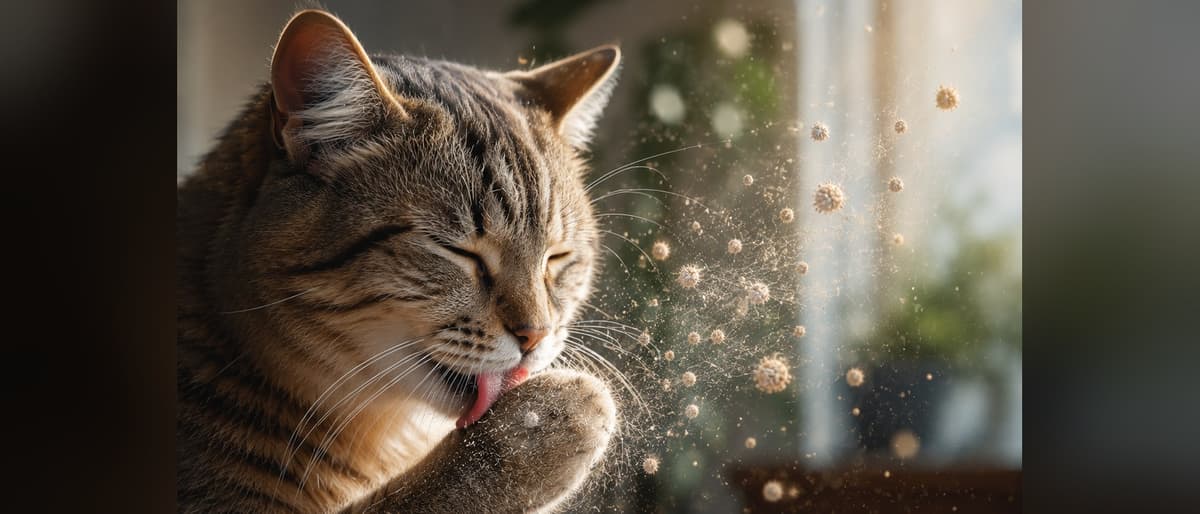
It works like this: saliva is wicked into the papillae by capillary action, and when the cat draws its tongue across the coat, the papillae release it deep down — all the way to the skin, beneath the outer layer of hair. A flexible base lets them rotate when they meet resistance, such as a mat.
All six species examined, from the domestic cat to the lion, use the same solution. A prototype brush with 3D-printed papillae was built on the strength of the finding.
5. Claws: retracted by default, extended by effort
A dog clicks its claws on the floor. A cat moves in silence. Bryant and colleagues (1996) showed where the difference comes from — and the answer runs counter to intuition.
A cat's claw is retracted by default. Two elastic ligaments on the upper side of the last toe bone hold it there. The mechanism is entirely passive: keeping the claw sheathed costs the cat nothing.
Extending it, by contrast, is an active act. The cat contracts its flexor muscles, the ligaments stretch, the last bone rotates and the claw emerges. When the muscles relax, the ligaments draw it back in on their own. Bryant also noticed that the bone rotates not only upward but slightly sideways — allowing the claw to be tucked away even deeper.
Three things follow. The cat stalks silently, unused claws are not blunted against the floor, and unsheathing a claw is a decision rather than a reflex. And one more: a scratching post does not sharpen claws like a knife — it strips away the outer, hardened layers, because a claw grows in layers like an onion.
6. Purring without the brain
For decades the accepted theory held that purring required active muscle contraction: the brain would send impulses to the larynx 25–30 times a second.
Herbst and colleagues (2023) tested this in a way that disarmed the theory. They took eight larynges from domestic cats, collected post-mortem and entirely disconnected from the nervous system, and passed air through them under controlled pressure.
All eight began to oscillate on their own at 25–30 Hz — exactly the range of purring. No brain, no nerves, no conscious control. Just anatomy and airflow.
The authors also found the reason: the cat's vocal folds contain pads of dense collagen and elastin whose mass lowers the frequency of vibration into the purring range.
What this means, and what it does not
The finding does not say the brain has nothing to do with purring — the cat still has to move air through its larynx in a particular way. What it does say is that the frequency itself needs no neural control: it follows from the structure of the larynx, much as the pitch of a reed follows from its shape. That explains how a cat can purr while injured or very weak.
I write more about what purring actually signals, and why it does not always mean contentment, in the piece on purring.
7. Drinking: played out in fractions of a second
Finally, a curiosity that travelled the world in 2010.
Reis and colleagues (2010) filmed a cat drinking with a high-speed camera. A dog scoops water with its tongue curled into a ladle — a cat does something entirely different and far subtler.
The cat barely touches the surface with the tip of its tongue and pulls it back sharply — about four times a second in a domestic cat. Water rises vertically behind the retreating tongue, held up by inertia and surface tension. A narrow column of liquid forms, and the cat closes its mouth at precisely the moment it peaks but has not yet begun to fall.
It is a precise contest between inertia and gravity: pull the tongue back too slowly and the water falls; too quickly and the column breaks. Larger cats use the same mechanism, only more slowly, in proportion to body mass.
In summary: the cat as an engineering textbook
All seven share one thing — each is a solution to a specific problem, arrived at without any designer:
| Problem | The cat's solution |
|---|---|
| Hunting in the dark | A reflective eye layer plus whiskers as a spatial sensor |
| Moving silently | Claws held in passively, by ligaments |
| Cleaning the coat | Hollow tongue papillae and capillary action |
| Navigating right at the muzzle | Whiskers replacing vision over the last few centimetres |
| Purring while weakened | A passive mechanism needing no neural control |
| Drinking without splashing | Inertia against gravity, four times a second |
Several of them have already reached biomimetics laboratories — from touch sensors shaped like vibrissae to a brush modelled on tongue papillae.
Next time your cat drinks from its bowl or purrs on your lap, remember that you are watching a set of solutions evolution spent millions of years refining. The cat has no idea. It simply uses them.
References
- Ahl, A.S. (1986). The role of vibrissae in behavior: a status review, Veterinary Research Communications, 10(4), 245–268doi:10.1007/BF02213989
- Williams, C.M. & Kramer, E.M. (2010). The advantages of a tapered whisker, PLoS ONE, 5(1), e8806doi:10.1371/journal.pone.0008806
- Ollivier, F.J., Samuelson, D.A., Brooks, D.E., Lewis, P.A., Kallberg, M.E. & Komáromy, A.M. (2004). Comparative morphology of the tapetum lucidum (among selected species), Veterinary Ophthalmology, 7(1), 11–22doi:10.1111/j.1463-5224.2004.00318.x
- Noel, A.C. & Hu, D.L. (2018). Cats use hollow papillae to wick saliva into fur, Proceedings of the National Academy of Sciences, 115(49), 12377–12382doi:10.1073/pnas.1809544115
- Bryant, H.N., Russell, A.P., Laroiya, R. & Powell, G.L. (1996). Claw retraction and protraction in the Carnivora: skeletal microvariation in the phalanges of the Felidae, Journal of Morphology, 229(3), 289–308doi:10.1002/(SICI)1097-4687(199609)229:3<289::AID-JMOR4>3.0.CO;2-U
- Herbst, C.T., Prigge, T., Garcia, M., Hampala, V., Hofer, R., Weissengruber, G.E., Svec, J.G. & Fitch, W.T. (2023). Domestic cat larynges can produce purring frequencies without neural input, Current Biology, 33(21), 4727–4732.e4doi:10.1016/j.cub.2023.09.014
- Reis, P.M., Jung, S., Aristoff, J.M. & Stocker, R. (2010). How cats lap: water uptake by Felis catus, Science, 330(6008), 1231–1234doi:10.1126/science.1195421
- Driscoll, C.A., Menotti-Raymond, M., Roca, A.L., Hupe, K., Johnson, W.E., Geffen, E., Harley, E.H., Delibes, M., Pontier, D., Kitchener, A.C., Yamaguchi, N., O'Brien, S.J. & Macdonald, D.W. (2007). The Near Eastern origin of cat domestication, Science, 317(5837), 519–523doi:10.1126/science.1139518
Frequently asked
Why must you never trim a cat's whiskers?
Because they are not ordinary hairs. Ahl (1986) describes vibrissae as a specialised sensory organ — 100–200 nerve endings sit at the base of every single whisker. A cat uses them to locate prey in poor light, position its head just before biting, sense air currents and signal emotion through whisker posture. Cutting them is not grooming, it is switching off a sense. They grow back, but in the meantime the cat loses its bearings, jumps less accurately and struggles to find its bowl in dim light.
Why do cats' eyes glow in the dark?
Because they have a reflective layer behind the retina, the tapetum lucidum, which bounces light back. Ollivier and colleagues (2004) described the feline version, called tapetum cellulosum, as a sheet of cells filled with crystals of riboflavin — vitamin B2. A photon that passed through the retina without hitting a receptor is reflected and gets a second chance. The glow in a flash photograph is the same mechanism, with the light returning to the lens. Humans have no such layer; red-eye in photographs is a reflection from the blood-rich back of the eye.
Do cats drink differently from dogs?
Completely differently. A dog scoops water with its tongue curled into a ladle. A cat barely touches the surface with the tip of its tongue and pulls it back sharply — about four times a second. A column of water rises behind the retreating tongue, held up by inertia and surface tension, and the cat closes its mouth at the exact moment the column peaks and has not yet fallen. Reis and colleagues (2010) filmed this with a high-speed camera and showed that larger cats use the same mechanism, only more slowly, in proportion to body mass.
Is it true that purring does not require the brain?
That is what Herbst and colleagues (2023) found. The team took eight larynges from domestic cats, entirely disconnected from the nervous system, and passed air through them under controlled pressure. All of them began oscillating at 25–30 Hz — exactly the range of purring. This does not mean the brain has nothing to do with purring; the cat still has to move air through the larynx in a particular way. It does mean the frequency itself needs no neural control, because it follows from the structure of the larynx and the airflow.